Summary
Someone walks into a hybrid office in San Francisco at 10am and every obvious desk is taken. The two by the window, gone. The one near the good monitor, gone. They end up wedged into a spot near the printer, wishing they’d known which desks were actually free before they left home. That’s the exact problem a good hot desking setup solves, and the exact problem a bad one creates for office workers trying to find some open desk space. This post covers what hot desking actually means, how it works day to day, the real pros and cons, and how it compares to other seating models.
What Is Hot Desking? (Definition)
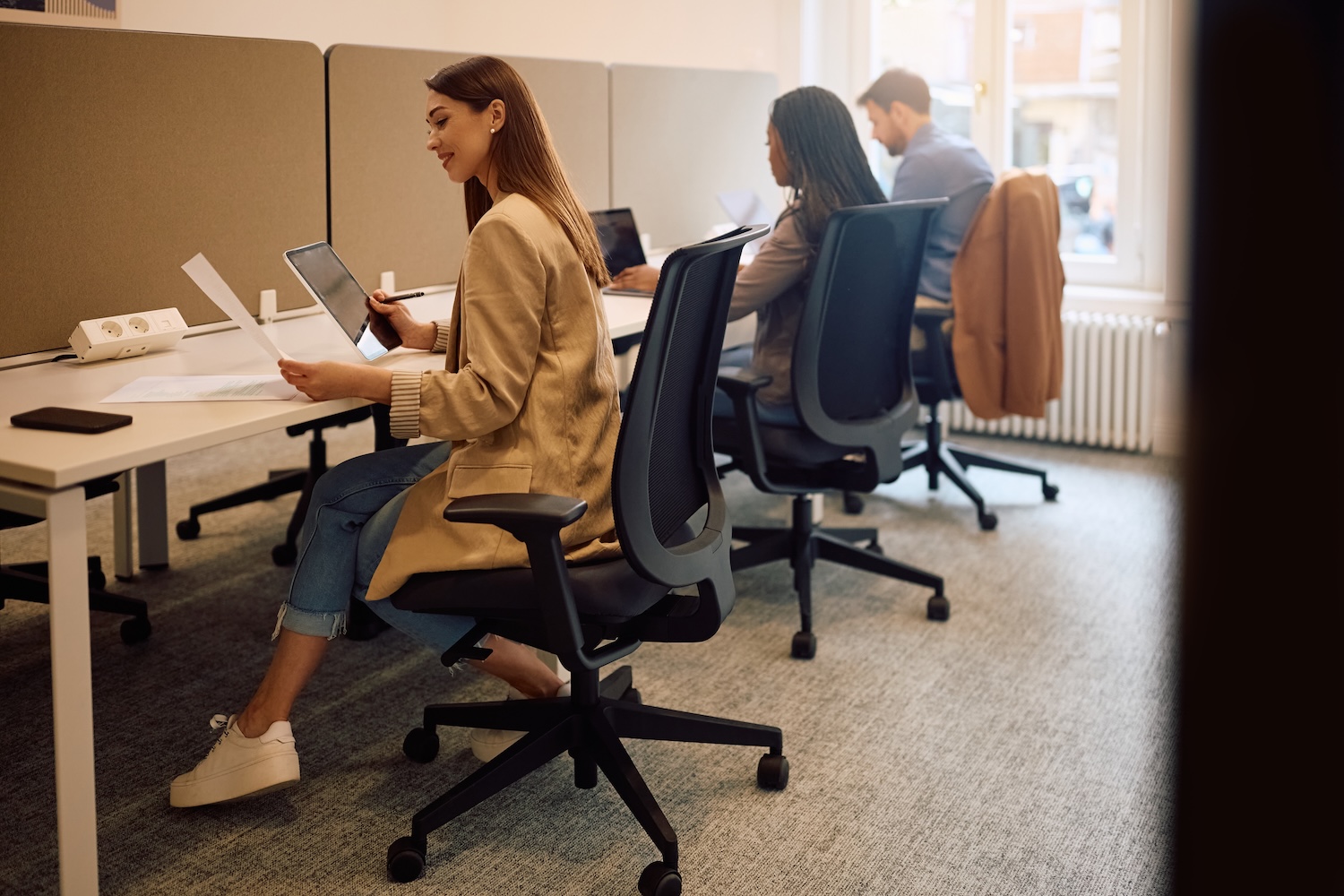
Hot desking is a flexible seating model, sometimes referred to as free addressing, where desks aren’t assigned to one person. Employees choose or reserve any available desk each time they come in, rather than sitting at the same spot every day. It’s the opposite of a permanent desk or a private office, and closer to how open plan offices already treat most shared space.
The term traces back to “hot bunking,” also called hot racking, in shift work, where a bed stays warm because someone’s about to use the same bunk next. Same idea, a hot desking system applied to an office desk instead of a ship’s bunk.
It’s worth being clear about what a hot desking model isn’t. It’s not the same as having no desk at all, someone still ends up sitting somewhere and working from it for the day. And it’s not the same as hoteling or assigned seating, both of which add more structure than a true hot desk model does. More on that distinction below.
How Hot Desking Works Day to Day
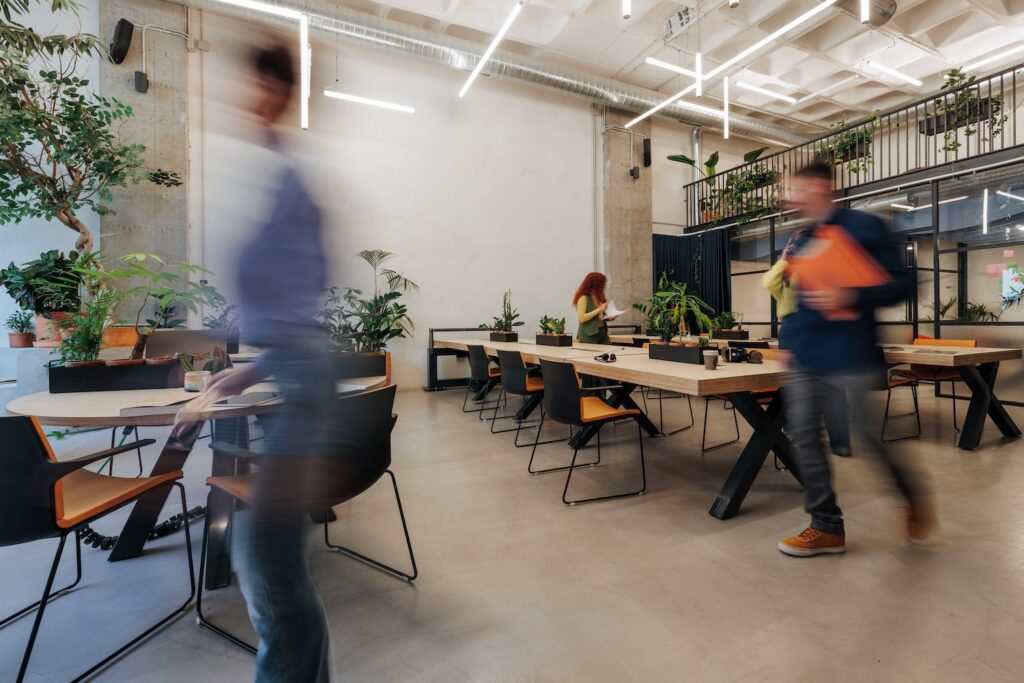
The mechanics are simple in theory: an employee decides to come in, checks which desks are open, through an app, desk booking software, or just walking the floor in a low-tech setup, claims one for the day, and works from wherever they land.
How that actually plays out for implementing hot desking depends heavily on whether there’s a system behind it. An unmanaged hot desk floor works on an ad hoc basis: first come, first served, no booking solution, no way to check availability before showing up. A managed one adds a proper desk booking solution, QR check-ins, and sometimes designated zones, so multiple employees know what’s open before they’re standing in the middle of the office layout holding a laptop.
In a managed system, this usually shows up as two options: same-day booking for the person who decides that morning they’re coming in, and reserving a desk ahead of time for the person planning a week out. Most offices end up needing both, since different employees show up for different reasons on any given day, and the typical setup has to work for the next person who books that same spot tomorrow.
Whatever the setup, the basic act is the same: employees reserve desks or book hot desks for a shift, then hand them back, which is really just a formal way of describing desk sharing among however many people rotate through a given hot desking arrangement each week.
Pros and Cons of Hot Desking
Like any seating model, hot desking comes with benefits and tradeoffs. Understanding both helps organizations create a workplace that balances space efficiency with employee satisfaction.
Pros of Hot Desking
- Lower real estate costs: Reduce office expenses by eliminating the need for a one-to-one desk-to-employee ratio when employees aren’t in the office every day.
- Improved space utilization: Make better use of available office space by reducing the number of permanently assigned desks that sit empty.
- Greater flexibility: Give employees the freedom to choose where they work based on their hybrid schedules and daily needs.
- More opportunities for collaboration: Encourage employees to sit near different teams, share workspaces, and build connections beyond their immediate coworkers.
Cons of Hot Desking
- Loss of personalization: Employees may miss having a dedicated desk and a sense of ownership over their workspace, potentially affecting employee satisfaction.
- Difficulty finding available desks: Without a reliable booking system, employees may waste time searching for a workspace when they arrive.
- Limited personal storage: Employees need alternative storage solutions for personal belongings when they no longer have assigned desks.
- Increased noise and distractions: Without dedicated spaces like phone booths, open plan offices can become noisy, while meeting rooms and conference rooms may be occupied by employees taking individual calls.
Most of these challenges can be addressed with the right tools and workplace policies. The key is to consider employee preferences and implement a hot desking model that supports how people actually use the office.
Is Hot Desking Right for Your Office?
A hot desking strategy fits some offices better than others. A few questions worth answering before adopting one:
- How many days a week is the average office worker actually in the building, factoring in remote work and any fully remote workers who rarely come in at all?
- Does any team need dedicated desks for role-specific reasons, like compliance requirements or fixed equipment?
- Is there a booking system in place, or would this run on a first-come, first-served basis?
- How will unused, no-show desks get released back to the pool instead of sitting reserved and empty?
- Do employee preferences actually point toward wanting a hot desk model, or is it being adopted purely to cut costs?
That last set of questions matters more than it looks like on paper. A hot desk model without a release mechanism just becomes assigned seating with extra steps. It’s also worth noting that hot desking is close to the default at most coworking spaces built for self employed workers, freelancers, and professional services firms renting flexible space by the seat, which is part of why the model feels familiar even to people who’ve never worked in a traditional office.
Hot Desking vs. Other Seating Models
Hot desking, hoteling, and assigned seating get used interchangeably, but they’re not the same thing, and the right workspace solutions usually combine more than one.
Hot desking means no assigned desk, booked as needed, often first-come-first-served or same-day, the most flexible of flexible workspaces. Hoteling is similar in spirit but usually more structured, think recurring reservations or dedicated zones rather than a fully open pool. Assigned seating means the same desk every day, no booking required or possible. A coworking space often blends all three under one roof, shared spaces for drop-in workers alongside dedicated desks for members who pay for one.
Why Teams Choose Maptician
Maptician’s desk booking software handles the parts of hot desking that break down without one: finding a desk, releasing it when it goes unused, and leaving room for creative ideas about how a freed-up floor gets used next.
Self-service booking, wherever it’s needed. Employees can find and reserve a desk with the right desk features for the day, by location, preference, or team zone, from web or mobile, without waiting on an admin to sort it out.
Same-day and advance booking, both covered. Same-day booking supports spontaneous office days, while booking days or weeks ahead works just as well for planned ones.
No-show desks that release themselves. QR code check-ins and badge integration confirm that someone actually showed up. If no check-in happens, the desk automatically releases back to the pool instead of sitting reserved and empty all day.
Room for every seating model at once. Flexible pools of desks can sit alongside assigned desks or department zones, so hot desking and other seating models coexist in the same office instead of forcing an all-or-nothing choice.
Brightree, a digital healthcare technology company with more than 800 employees across seven locations, moved off spreadsheet-based occupancy tracking to real-time floor plans built around hot desking and hoteling.
“We are thrilled with our choice of Maptician. Using their intuitive interface, we can now better manage our employees and space to keep everyone safe and healthy.”
— Liz Brown, Vice President of Customer Success, Brightree
Give Hot Desking a System, Not Just a Floor Plan
Hot desking works when people can trust it, when they can see what’s open before they leave home, and when a desk that goes unused actually goes back into the pool. Get that part right, and the model that sounded chaotic on paper starts to feel like the most flexible thing about the office.
See How Maptician Handles Hot Desking: Request a Demo
FAQs
What is hot desking? Hot desking is a flexible seating model where desks aren’t assigned to one person. Employees choose or reserve any available desk each time they come into the office, rather than sitting at the same spot every day.
How is hot desking different from hoteling? Hot desking is generally the more open of the two, often first-come-first-served or booked same-day with no fixed structure, sharing desks with whoever gets there first. Hoteling adds more structure on top of the same basic idea, recurring reservations, dedicated zones, or more advance planning built in.
Does hot desking work well for hybrid teams? Yes, when it’s paired with a booking system. Hybrid schedules mean attendance varies day to day, and hot desking lets office space flex with that instead of sitting empty on light days or running short on heavy ones.
What happens if someone books a hot desk and doesn’t show up? In a well-designed system, the desk gets released back to the pool so someone else can book it. Without that release mechanism, a no-show reservation just sits empty, which is one of the more common complaints about hot desking done without the right tools.
Design for How Work Happens
See how Maptician turns workplace data into smarter space planning decisions.